Football is one of the most strategic sports in the world, and defense plays a critical role in determining the outcome of every game. While many fans love the thrill of touchdowns and offensive plays, it’s the defense that often wins championships. Understanding how many players are on defense in football and what each of them does is key to appreciating the game’s tactical side.
The Basic Answer
In traditional American football, there are 11 players on defense on the field at any given time. This matches the 11 players on offense. However, the positions and formations of these defensive players can change based on the team’s strategy, the game situation, and the type of play the opponent is expected to run.
The Main Purpose of the Defense
The defense’s main goal is simple: stop the offense from scoring. But achieving that involves several smaller objectives such as:
- Preventing the quarterback from completing passes
- Tackling running backs before they gain yards
- Intercepting passes
- Forcing fumbles or turnovers
- Blocking field goals or extra points

To do this effectively, defensive players must work together with precision and discipline. Each position on defense has a specialized role designed to cover different parts of the field.
The Three Main Defensive Groups
Defensive players are generally divided into three main groups: the defensive line, the linebackers, and the defensive backs. Let’s break these down.
1. Defensive Line
The defensive line is the first line of defense, positioned right at the line of scrimmage. These players are responsible for stopping the run and pressuring the quarterback.
Typical defensive line positions include:
- Defensive Tackles (DT): Usually two players placed in the middle to stop running plays.
- Defensive Ends (DE): Two players on the outer sides who try to rush the quarterback or contain running backs.
A standard defensive line has 3 to 4 players, depending on the formation:
- 3-4 defense: 3 linemen (2 DE, 1 DT)
- 4-3 defense: 4 linemen (2 DE, 2 DT)
These players are usually the largest and strongest on the team, often weighing over 250 pounds, built to overpower the offensive line.
2. Linebackers
Behind the defensive line are the linebackers — the most versatile defensive players. They must stop the run, cover receivers, and sometimes rush the quarterback.
There are usually 3 or 4 linebackers, depending on the team’s formation.
Common linebacker roles include:
- Middle Linebacker (MLB): Often called the “quarterback of the defense,” this player calls plays and is responsible for stopping runs up the middle.
- Outside Linebackers (OLB): Positioned on the edges, they defend against outside runs, short passes, and can blitz the quarterback.
In a 4-3 formation, you have:
- 4 linemen and 3 linebackers
In a 3-4 formation, you have:
- 3 linemen and 4 linebackers
Linebackers must be strong, fast, and smart — able to read plays and adjust instantly.
3. Defensive Backs (Secondary)
The last layer of defense is known as the secondary. These players protect against passing plays and deep throws. They need excellent speed, agility, and awareness.
Defensive backs include:
- Cornerbacks (CB): Usually 2 players who cover wide receivers and prevent them from catching passes.
- Safeties (S): Usually 2 players — one strong safety (SS) and one free safety (FS).
- The strong safety supports in stopping the run and covering tight ends.
- The free safety roams deeper in the field, ready to intercept long passes.
A standard defense typically uses 4 defensive backs, though this can change based on the opponent’s offense.
Common Defensive Formations
Defensive coordinators use different formations depending on the type of play they expect from the offense. Some of the most common ones are:
| Formation | Description | Typical Use |
|---|---|---|
| 4-3 Defense | 4 linemen, 3 linebackers, 4 defensive backs | Balanced against run and pass |
| 3-4 Defense | 3 linemen, 4 linebackers, 4 defensive backs | Strong blitz potential |
| Nickel Defense | 4 linemen, 2 linebackers, 5 defensive backs | Used against pass-heavy offenses |
| Dime Defense | 4 linemen, 1 linebacker, 6 defensive backs | Used for long-yardage passing downs |
These formations help defenses adapt to offensive strategies, adding more speed or strength as needed.
Why the Number of Defensive Players Stays the Same
While formations change, the total number of players on defense remains 11. This rule is standard across all levels — from the NFL to college and high school football.
If a team has more than 11 players on the field during a play, it results in a penalty for “too many men on the field.” Similarly, if they have fewer than 11, they risk leaving parts of the field unprotected.
Special Situations in Defense
Sometimes, defensive coaches make temporary adjustments depending on the situation:
- Goal-Line Defense: When the opponent is close to scoring, defenses may bring in extra linemen to stop the run.
- Prevent Defense: Late in the game, teams may use extra defensive backs to guard against deep passes.
- Blitz Packages: Linebackers or defensive backs may rush the quarterback to create pressure and force mistakes.
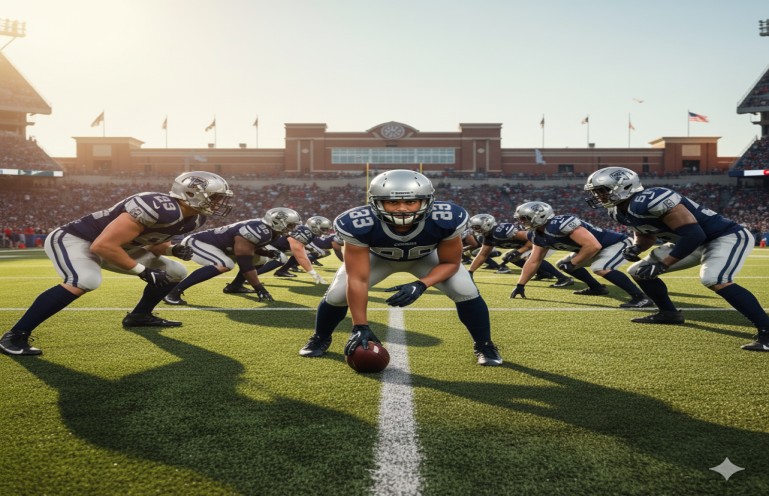
These strategies add excitement to the game and show how flexible defensive units can be.
Steps to Understand Defensive Alignment
If you’re new to football, here’s how to identify defensive players during a game:
- Watch the Line of Scrimmage: The big players closest to the line are the defensive linemen.
- Look Just Behind Them: The players standing slightly back are the linebackers.
- Spot the Deep Players: The ones further away from the line are the defensive backs.
- Count Them: You’ll always find 11 defensive players, no matter the formation.
- Notice the Movement: Before the snap, defenses often shift to disguise their play.
Learning to recognize these layers will help you follow the game with a new level of understanding.
Importance of Teamwork in Defense
Defense is all about teamwork. Each player depends on others to cover their assigned area. For example:
- If a linebacker blitzes, a safety may move up to cover his zone.
- If a cornerback plays tight coverage, it gives the defensive line more time to sack the quarterback.
One mistake in communication can lead to a big offensive play. That’s why defensive units spend hours in practice perfecting coordination and signals.
FAQs
Q1. How many players are on defense in football?
There are 11 players on defense, just like on offense.
Q2. What are the main defensive positions?
The main positions are defensive linemen, linebackers, and defensive backs.
Q3. What is a 4-3 defense?
It’s a formation with 4 linemen, 3 linebackers, and 4 defensive backs a balanced setup used by many teams.
Q4. Why do teams use nickel or dime defenses?
These are used to defend against passing plays by adding extra defensive backs.
Q5. Can a defense have fewer than 11 players?
Technically yes, but it’s a disadvantage because fewer players mean less coverage and tackling power.
Conclusion
Understanding how many players are on defense in football helps you appreciate the complexity of the game. With 11 players working together, each with a unique role, the defense becomes a powerful unit capable of turning games around. Whether it’s stopping a critical run, forcing a fumble, or intercepting a pass, the defensive side of football showcases strategy, teamwork, and pure determination.
Next time you watch a game, pay attention to how these 11 defenders coordinate their moves you’ll gain a whole new respect for the art of defense in football.