
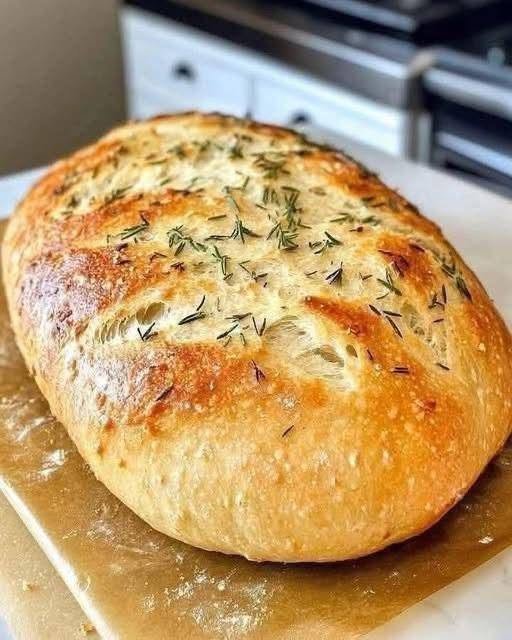
There’s something incredibly comforting about a loaf of rustic homemade bread, especially when it comes out of the oven with a golden crust and the warm aroma of rosemary and garlic filling the kitchen.
This Rustic No-Knead Rosemary Garlic Bread is one of those recipes that looks impressive but is surprisingly easy to make. There’s no complicated kneading or special bread-making skills required. Just mix the ingredients, let the dough rest, shape it, and bake.
The combination of fragrant rosemary, savory garlic, and a beautifully crisp crust makes this bread perfect for soups, pasta, roasted meats, or simply dipping into olive oil.
🌿 Introduction
If you love bakery-style bread but don’t want to spend a lot of time kneading dough, this recipe is for you.
The long resting time allows the flour, yeast, and water to develop flavor and structure naturally. Fresh rosemary and garlic add an incredible savory aroma that makes the whole kitchen smell amazing while it bakes.
The result is a rustic loaf with a crisp, golden outside and a soft, chewy center.
💛 Why You Will Love This Recipe
This bread is:
- 🥖 No-knead and easy – Minimal hands-on work.
- 🌿 Packed with rosemary flavor – Fresh herbs make every bite fragrant.
- 🧄 Garlicky and savory – Perfect for garlic bread lovers.
- 🔥 Crispy on the outside – A beautiful rustic crust.
- ☁️ Soft and chewy inside – Just like bakery-style artisan bread.
Once you try this method, you may never want to knead bread the traditional way again!
🛒 Ingredients List
For this Rustic No-Knead Rosemary Garlic Bread, you’ll need:
- 3 cups (375 g) all-purpose or bread flour
- 1½ teaspoons salt
- 1 teaspoon instant yeast
- 1½ cups (360 ml) warm water
- 2 tablespoons olive oil
- 2–3 cloves garlic, finely minced
- 1–2 tablespoons fresh rosemary, finely chopped
- ½ teaspoon dried rosemary, optional
- Extra flour, for shaping
For serving:
- Olive oil
- Flaky salt
- Fresh rosemary, optional
Tip: Fresh rosemary gives the bread the strongest aroma, but dried rosemary works well when fresh herbs aren’t available.
👩🍳 Step-by-Step Instructions
1. Mix the Dry Ingredients
In a large bowl, combine the flour, salt, and instant yeast.
Add the chopped rosemary and minced garlic.
Stir everything together so the herbs and garlic are evenly distributed.
2. Add the Wet Ingredients
Pour in the warm water and olive oil.
Using a wooden spoon or spatula, mix until a sticky, rough dough forms.
Don’t worry if the dough looks messy. That’s exactly what you want for a no-knead loaf.
3. Let the Dough Rest
Cover the bowl tightly with plastic wrap or a clean kitchen towel.
Let the dough rest at room temperature for approximately 8–12 hours.
Overnight is especially convenient.
The dough should become noticeably puffy and bubbly.
4. Shape the Dough
Lightly flour your work surface.
Transfer the dough onto it and gently fold the edges toward the center to form a rough round loaf.
There’s no need to knead it.
Place the shaped dough onto parchment paper and cover loosely.
Let it rest for another 30–45 minutes.
5. Preheat the Dutch Oven
Place a Dutch oven with its lid inside the oven.
Preheat the oven to 450°F (230°C) for about 30 minutes.
Preheating the Dutch oven helps create the beautiful crust this bread is known for.
6. Prepare the Loaf
Carefully transfer the dough, along with the parchment paper, into the hot Dutch oven.
Use a sharp knife to make a shallow slash across the top.
If desired, sprinkle a little extra rosemary or flaky salt over the surface.
7. Bake
Cover with the lid and bake for 25–30 minutes.
Then carefully remove the lid and continue baking for another 10–15 minutes, or until the bread is deeply golden brown.
The uncovered baking time helps create that gorgeous rustic crust.
8. Cool Before Slicing
Remove the loaf from the Dutch oven and place it on a wire rack.
Let it cool for at least 30–45 minutes before slicing.
It may be tempting to cut into it immediately, but allowing it to cool helps the inside finish setting properly.
✨ Pro Tips & Variations
- Use fresh garlic: It gives the strongest flavor and aroma.
- Don’t add too much flour: A sticky dough helps create a lighter interior.
- Let it rest overnight: Longer fermentation gives the bread more developed flavor.
- Use a Dutch oven: It traps steam and helps create a crisp crust.
- Add Parmesan: A little grated Parmesan can add extra savory flavor.
- Try other herbs: Thyme, oregano, or sage can be used alongside rosemary.
- Add chili flakes: A small pinch gives the loaf a gentle spicy kick.
One mistake to avoid: Don’t slice the bread while it’s piping hot. Give it enough time to cool so you don’t end up with a gummy center.
🥗 Simple Ingredient Benefits
This homemade bread uses straightforward ingredients:
- Rosemary adds aromatic flavor without needing complicated seasonings.
- Garlic brings a naturally savory taste.
- Olive oil contributes richness and tenderness.
- Flour provides the structure needed for the loaf.
Because you’re making it yourself, you can also adjust the herbs and garlic to suit your taste.
🍽️ Serving Suggestions
This Rustic No-Knead Rosemary Garlic Bread is delicious served:
- With warm soup 🍲
- Alongside pasta
- With roasted chicken or vegetables
- Dipped in olive oil
- As garlic toast
- With a cheese board
- With scrambled or fried eggs for breakfast
For a simple appetizer, slice the warm bread and serve it with olive oil, flaky salt, and a little freshly chopped rosemary.
❄️ Storage Tips
Store the cooled loaf at room temperature in a bread bag or loosely wrapped in a clean kitchen towel for up to 2–3 days.
Avoid storing crusty bread in the refrigerator because it can make the texture stale more quickly.
For longer storage, slice the bread and freeze it in an airtight freezer-safe bag for up to 2–3 months.
You can toast individual slices straight from frozen.
❓ Frequently Asked Questions
Can I make this bread without a Dutch oven?
Yes. A Dutch oven gives the best crust, but you can bake the loaf on a preheated baking sheet or baking stone. Adding some steam to the oven can help with crust development.
Can I use dried rosemary?
Absolutely. Use a smaller amount because dried herbs are more concentrated than fresh rosemary.
Can I let the dough rise longer?
Yes, especially if you’re using a cooler room. Keep an eye on the dough rather than relying only on the clock. It should become bubbly and noticeably expanded.
Why is my dough so sticky?
No-knead bread dough is naturally quite sticky because of its higher water content. Avoid adding lots of flour, as this can make the finished loaf dense.
Can I use whole wheat flour?
Yes, you can replace part of the white flour with whole wheat flour. Start with a smaller portion so the loaf doesn’t become unnecessarily heavy.
🌟 Conclusion
This Rustic No-Knead Rosemary Garlic Bread proves that homemade artisan-style bread doesn’t have to be difficult.
With just a handful of ingredients, a little patience, and no kneading, you can make a gorgeous loaf with a crisp golden crust, soft chewy center, fragrant rosemary, and delicious garlic flavor.
